Life really is some kind of balance between thinking, planning and doing …
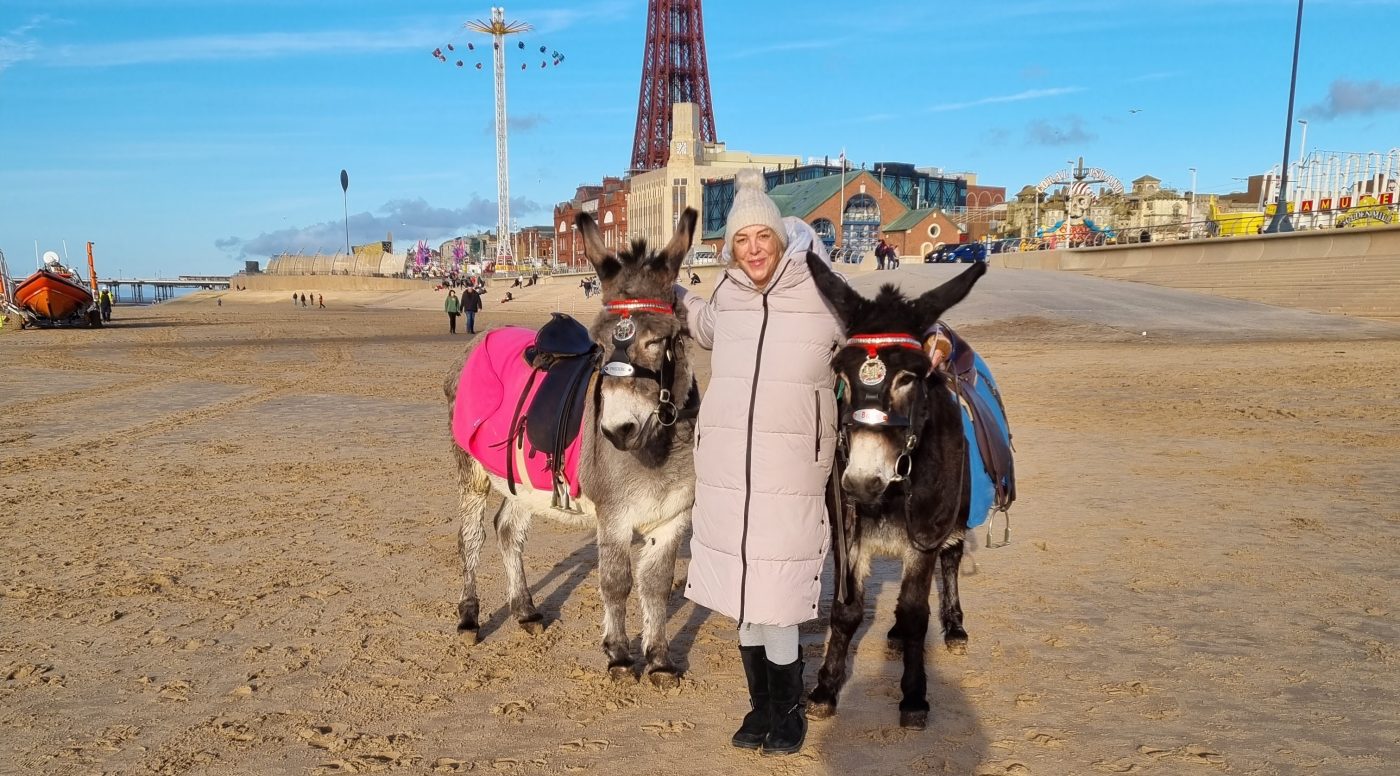
After months of silence beneath the ground, something begins to stir. What was working in the dark finally shows itself in colour, in warmth, in the first brave notes of change. These songs follow that same rhythm — jazz‑kissed, hopeful, lightly stepping toward better things ahead. Tunes we are familiar with and some new discoveries from other decades and forthcoming surprises.
A collective of art mixed with history and the sensory of sound for emergence. A reminder that what grows in the quiet can transform everything.
A little spring courage, curated with a rabbit’s instinct for the good things waiting to be found. And here we may see some contemporary form of movement. I am learning. We are learning. We are growing together.
For years, many of us were told, “Things like this don’t happen here.” But they do. And the world is finally waking up.
This International Women’s Day, I write for every woman who has lived through the silent torture of being monitored, tracked, manipulated, or digitally intruded upon — and for every woman who has been dismissed when she tried to speak.
Technology has evolved faster than the laws designed to protect us. And with that evolution has come a new breed of abuser — one who doesn’t need to be physically present to violate someone’s life.
Today, anyone with:
can intrude into someone else’s world.
Spyware. Hidden cameras. Car trackers. Smart‑home vulnerabilities. Door‑code access. Drones. Social media manipulation. Persona‑based stalking. ISP‑level intrusion.
These are not plotlines from thrillers. These are real tools being misused in real homes, workplaces, and relationships.
Spyware in the hands of instability is not a toy. It is not curiosity. It is a potential killer.
One of the most disturbing trends of recent years is the discovery of pinhole cameras hidden in:
These devices are:
And they are being found by women across the world.
The idea that someone can press a few buttons and gain access to a woman’s most private moments is not just a violation — it is a form of psychological assault.
This is not “curiosity.” This is not “interest.” This is abuse.
We were sold smart technology as convenience. But in the wrong hands, it becomes a tool of coercive control.
Businesses that rely on:
are vulnerable to corruption by someone with:
When someone gains access to a business’s smart infrastructure, they can:
This is not science fiction. This is happening now.
Most people believe antivirus software protects them. But when someone gains access at the level of:
traditional protections become meaningless.
This is why victims often feel:
even when their devices appear “clean.”
This is not paranoia. This is the reality of modern digital intrusion.
Some of the most dangerous individuals are not the ones who shout. They are the ones who perform.
They are:
They craft online identities that appear harmless, humorous, or socially conscious — while using technology to violate the privacy of others.
They are bad actors. They are wordsmiths who weaponise language, characters, and storytelling to distort reality.
They:
These individuals rely on the fact that their public persona will shield them from suspicion. And too often, it does.
One of the darkest developments of the last decade is the rise of companies offering “tracking services” disguised as:
“Is your partner cheating?”
“Keep your children safe.”
“Monitor your employees.”
But beneath the marketing lies a truth: these services can be — and often are — used to stalk women.
They provide:
All available to anyone with a credit card and a motive.
This is not protection. This is commercialised surveillance. And it is being sold openly.
This is not a local issue. This is not a “one‑off.” This is not a rare anomaly.
Across the world, people are using:
to gain access to the lives of others they are unable to be a part of.
It is the coward’s playground — a place where anonymity becomes armour and technology becomes a weapon.
When a woman’s devices are compromised, her world collapses inward.
How does she call for help when her phone is hacked. How does she write her diary when her laptop is watched. How does she undress, rest, or use the bathroom when she fears cameras in her home.
Women are being forced into prisons built from:
Prisons inside their own homes. Prisons inside their own routines. Prisons inside their own bodies.
This is not “fearfulness.” This is not “overreaction.” This is the lived reality of digital intrusion.
These cases have forced the government to confront the reality that: nowhere is automatically safe.
As a result:
Some experts now frame severe stalking as a form of psychological terrorism — because it uses:
to destabilise a person’s life.
This is the language victims have needed for decades.
When a perpetrator is never caught, never held accountable, or never even investigated, the victim is left carrying:
It is overwhelming. It is unjust. And it is far more common than people realise.
Survivors often end up seeking medical help for the psychological aftermath — while the person who caused the harm walks away untouched.
This imbalance is one of the greatest injustices of modern digital life.
There is nothing bold, clever, or powerful about people who use technology to invade a woman’s life. There is no bravery in hiding behind screens, fake personas, or covert devices. There is no strength in stealing what was never theirs to touch.
Cowards who:
And we must not be complicit — not through silence, not through disbelief, not through minimising the harm.
This International Women’s Day, we rise for every woman who has been:
We rise for:
We rise for a world where:
And we rise with the knowledge that: most people are united. Most men are beautiful. Love is more powerful than fear. And truth is stronger than the work of bad actors and their lies.
Our freedom is not optional. Our privacy is not negotiable. And our voices will not be silenced. We want technology to fight back for us and catch these cowards who take without our permission.
To every woman who has been pursued by an unworthy coward — a man she would never choose, never trust, never welcome into her real life — this is for you.
To every woman who has lived with a stalker, an abuser, a digital intruder, to every woman who has been watched, followed, monitored, or manipulated, to every woman who has been forced into a prison built from fear and technology:
You are a survivor of something most people cannot imagine. And you deserve a life of safety, dignity, and peace.
This is the moment to stand up. To seek help. To speak your truth. To rebuild your life with worth, purpose, and power. To step into a future that belongs to you — not to the coward who tried to steal it.
Because that is what these people are: cowards.
Cowards who take what they could never earn. Cowards who hide behind screens and personas. Cowards who project their own emptiness onto strong women. Cowards who mistake access for intimacy and surveillance for power.
They are not above the law. They are not untouchable. They are not the giants they pretend to be.
And they are not the story.
You are.
You — the woman who survived.
You — the woman who endured.
You — the woman who still stands.
You — the woman who refuses to be defined by someone else’s sickness.
And here is the truth the cowards cannot bear:
This is not a battle of women versus men. This is humanity versus the few who choose harm.
This is the sisterhood rising — not in silence, not in shame, but in unity, clarity, and strength.
We rise for ourselves. We rise for each other. We rise for the women who cannot yet speak. We rise for the girls who must grow up in a safer world. We rise because love is stronger than fear, and truth is stronger than the work of bad actors and their lies.
We rise because we are done being hunted. We rise because we are done being watched. We rise because our lives are our own.
And together — in our millions, across borders, across generations — we rise.
I hadn’t planned on writing about my little fluffs, but clearly something in me needed to reach out. My animals are stitched into my days whether I intend to talk about them or not.
My old boy — rescued almost fifteen years ago — still uses my head as a midnight treadmill. One a.m., purring like a tiny engine, demanding fuss. I’ve tried shutting him out, but he throws himself at the door with such force I worry he’ll knock himself into another realm. He came back to me through my son after his sibling died last year, and losing that one nearly split me open. Pets do that. They love without conditions, and the grief is the price of that purity.
Then there’s the one left for dead in a plant pot outside a foodbank, rain hammering down. Friends got him to rescue, and I helped nurse him from the edge. I brought him home to die — he chose life instead. Now he’s fat, adored, and entirely himself.
He vanished for six months during the height of the stalking terror. I still don’t know how I got through that period. My cat had been charming a chip shop for scraps, and a kind lady put him on Facebook. I don’t do socials, but a mate saw it and contacted me. We trapped him in thunder and rain and brought him home.
In the meantime, one dark night I trapped another stray cat in an alley way that I thought was him. It wasn’t. Nobody claimed the poor baby, so I kept him. He stole my heart. And then, a couple of months after this, my original boy returned, the stand‑in died in my arms at the vets. Very poorly. Very loved. Possibly he was abandoned as his previous owner couldn’t afford the vet fees. He wasn’t neutered either. The alleys are full of lost love. But to be found. I love the back streets. Though tampering with security needs close supervision.
In the last three years I’ve held three animals as they left for the universe — my dog of eighteen years, and two cats. Each one tore something open and left something behind.
Two cats remain, plus the other little rescues who orbit this house. They take time, money, sleep, and emotional bandwidth. They also give structure, humour, warmth, and a reason to get up when the world feels sharp. We’re a sanctuary — all of us rescued, all of us recovering, all of us choosing one another.
Yes, I could do more without them. I don’t take holidays. I can’t just hop across the pond to see loved ones. We’d have to travel as a package. But it’s possible. And honestly, I wouldn’t trade this ecosystem of love and hope for anything.
Most days I potter — always something to do, always wondering where to start. The radio keeps me company, and for years now it’s been Jazz FM. I’ve gotten to know the characters. Danielle Perry is on at the moment. I feel like I live with her and the family sometimes. She shares how she met her husband, what she’s done with the kids. She’s a Gemini and I often think, she sounds like me, though her history in music is extensive.
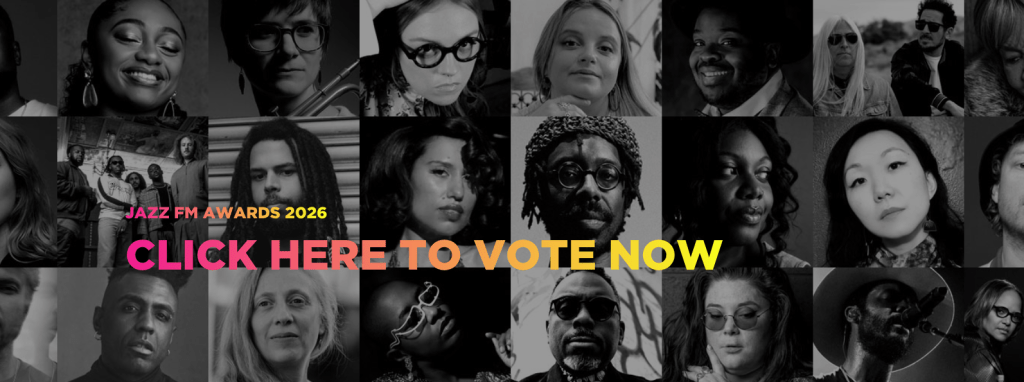
Yesterday she and the Jazz FM team covered the Jazz FM Awards — the nominees, the stories, the excitement. Now the public can vote. I’ll be honest: some of the acts I know well, others not at all. But that’s the quest — to discover the artists not yet on my radar.
I was thrilled to hear Emma‑Jean Thackray is up for an award. Her music is part of my story. She’s a brain‑stimulator, crafty, cosmic. And EarthONaut — their song arrived at the right moment for me and a special man across the pond. Then the absolutely ‘all mighty’ Snarky Puppy who delivered a full orchestral performance!! So good luck to them all. 🎶
But with any award system, I’d encourage people to vote honestly for who they enjoy most. Not strategically. The UK needs to rise in real talent — an altruistic platform of art, music, and intellectual entertainment. We need to break the loop that fills our heads with rubbish. Music is our pressure‑release valve.
I haven’t had time for TV. My focus is getting organised — and I haven’t been. Christmas was chaos with vintage. Now I need to step back, look at what I have, and decide: throw it away, give it away, or sell it. I need to put my nests into chapters. To create busy corners that still have a system.
I hope everyone is enjoying whatever makes them happy. Sometimes it’s the small things: a mannerism, finding something lost, a gesture of goodwill, a smile in the supermarket, a bird on the window ledge.
We must learn to live with ourselves before we can be a joy to another.
So anyway after you have explored the various artists and bands up for The 2026 Jazz Awards, you can vote!
 tiffanybelleharper.com